
 Online knowledge test
Newsroom
ICBC: New data shows hybrids rising in popularity as auto crime drops and injury crashes remain down
Updated 2025 data now available, alongside 10-year analysis
May 26, 2026
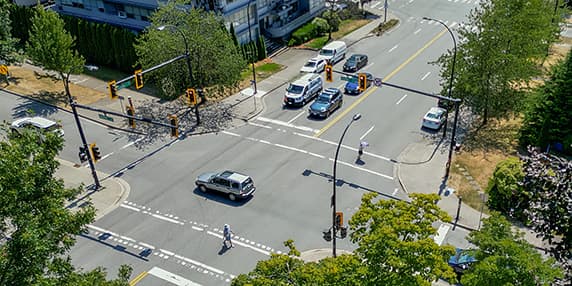
New ICBC analysis of 10-year data trends shows significant shifts in vehicle trends across B.C., including a rise in new hybrid vehicle registrations, a sharp decline in auto crime and crash counts that remain below pre‑pandemic levels.
Updated 2025 ICBC data on crashes, injuries, auto crime and violation tickets is now available at icbc.com.
Hybrid growth outpacing EVs
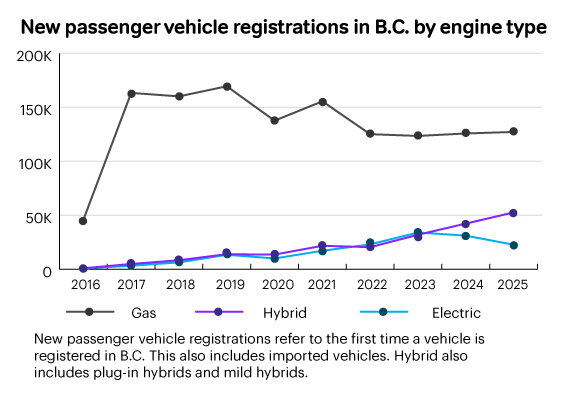
New vehicle registration data – referring to the first time a vehicle is registered in B.C. – shows changing patterns in vehicle choices with gas-powered vehicle registrations remaining below levels seen before 2020. Hybrid vehicles are growing steadily and now exceed electric vehicle registrations each year. While electric vehicle adoption rose quickly in recent years, that growth has slowed.
Crash levels below pre-pandemic highs
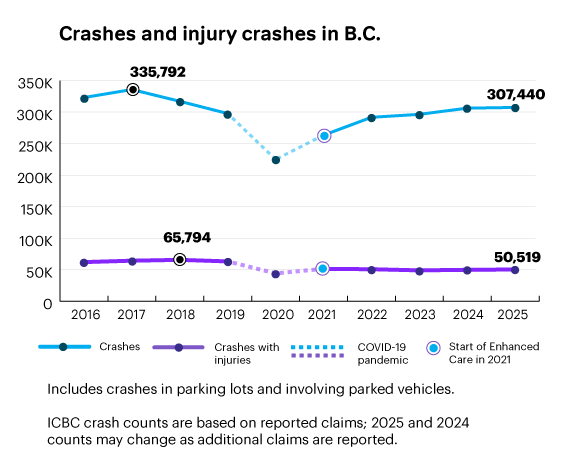
Both overall crashes and injury crashes in B.C. remain below pre-pandemic levels, despite steady growth in vehicles on the road, reflecting lasting changes in driving patterns following the COVID‑19 pandemic and the introduction of Enhanced Care in May 2021.
In 2025, injury crash levels were 21% below the pre-pandemic average (2016–2019), while overall crashes were 3% lower.
Auto crime sees major decline
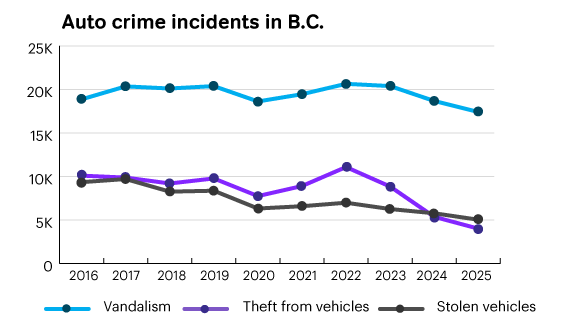
Auto crime has dropped by 31% in B.C. over the last 10 years. Most dramatically, vehicle break-ins have decreased by 60% since 2016, including a noticeable drop starting in 2023. Stolen vehicle incidents have decreased by 46% since 2016 while vandalism claims have remained relatively stable.
Crash risks and trends by road user
Crash risk peaks during weekday afternoon commutes – with Friday afternoons (3 p.m. to 5 p.m.) being the riskiest time on B.C. roads.
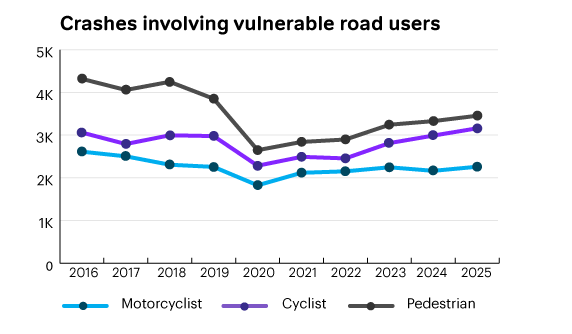
Crash patterns among vulnerable road users show a decline in 2020 followed by steady increases. Pedestrian crashes remain the highest, rising in recent years but still well below pre-2020 levels. Cyclist crashes have increased consistently and, by 2025, slightly exceed pre-2020 levels. Motorcycle crashes remain relatively stable and below pre-2020 peaks.
Detailed data available
A downloadable PDF  is available and includes yearly counts.
Next data update this fall
This is the second scheduled update to ICBC’s online statistics this year and includes data on injured pedestrians and cyclists, top crash locations, and crashes involving heavy vehicles, youth, motorcyclists and hit-and-runs.
The next update will be this fall with 2025 data on fatalities and police-reported crashes following data reconciliation with the BC Coroner’s Service, BC RCMP and RoadSafetyBC. Violation ticket and contravention data will be updated again at that time with partial 2026 counts.
We oversee extensive provincial data to inform road safety strategies, research, engineering and enforcement, and we’re committed to transparent, accessible data through online statistics and open data tools.
Working with communities, law enforcement and government, we support initiatives that aim to reduce crashes, improve road design, reduce vehicle emissions and encourage safer driving behaviours. We invest $50 million in road safety initiatives and loss management programs every year and recently increased our annual investment in road improvement projects to $13 million.

