
 Online knowledge test
Newsroom
Riding season is here: ICBC urging riders to train now to prevent crashes
April 21, 2026
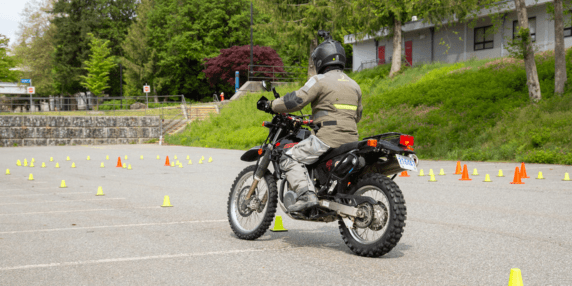
New crash data shows that nearly half of crashes (49%) where the motorcyclist was responsible are tied to the rider’s skills and losing control.* As motorcyclists get back on their bikes this spring, ICBC is asking riders of all experience levels to practice critical skills like hard braking and steering around hazards to stay safe on our roads.
Motorcyclists are over three times more likely (325%) to be injured or killed in a crash compared to people in a car.** Wearing protective gear and developing strong riding skills are important steps riders can take to reduce their risk.
With more motorcyclists and other vulnerable road users sharing our roads this spring, ICBC is asking drivers to stay alert, leave space, and take an extra moment to look for motorcyclists and other road users – especially at intersections and when turning left.
“We know riders are excited to get back out on the road this spring, and we want them to feel confident and prepared,” said Kathleen Nadalin, road safety manager at ICBC. “Taking time to focus on skills and preparation early in the season can help riders have a safer riding season.”
Riders injured or killed in B.C. have typically been licensed for more than 10 years, showing that experience alone isn’t enough to stay safe. Every rider benefits from training – whether that’s taking an advanced course with a riding school, attending a free police‑led skills event this spring, or practicing key maneuvers with cones in an empty parking lot.
“Motorcyclists face greater risk on our roads, and as riding season gets underway, the dangers increase for everyone,” said Niki Sharma, Attorney General. “It’s important that we all do our part for British Columbians to remain safe and injury-free. Skill‑building for riders and attentive driving can help reduce serious crashes on B.C. roads.”
“Good riding skills come from ongoing learning and practice,” said Kristin Parsons, executive director of the BC Powersports Dealers Association. “By connecting riders with training, safety resources and proper gear, our dealers help build confidence and keep riders safe.”
Tips for riders
Make sure your bike is ready for the road by checking the brakes, chain, cables, and tires, and changing the oil. If it hasn’t been ridden in a while, consider having a qualified mechanic look it over.
Along with practice, ICBC's learn to ride smart and tuning up for riders guides are helpful to freshen up your knowledge and skills.
Stay focused and ride at a safe speed so you have enough time to stop or steer if hazards appear on the road.
Wear protective gear every ride, including a helmet that meets or exceeds legal safety standards. Full-face helmets offer the best protection.
Signal early and don’t assume drivers see you. Avoid drivers’ blind spots when possible.
Tips for drivers
Most motorcycle crashes in B.C. happen at intersections – scan carefully and take an extra moment to look for motorcycles when turning left.
Stay alert, travel at a safe speed and leave at least three to four seconds of following distance behind a motorcycle.
When passing a motorcyclist, leave at least one metre of space – or 1.5 metres on roads with speed limits over 50 km/h.
Find more tips on icbc.com including a short video demonstrating three practice drills for building your riding skills. Follow ICBC on Instagram and Facebook for more road safety tips.
Motorcyclists are invited to attend free upcoming skills course events in Metro Vancouver and the Capital Regional District. Expert‑level police motorcycle riders will guide riders of all experience levels through practice drills focused on improving low-speed control and balance. ICBC’s road safety team will demonstrate protective clothing and gear options, with riding schools attending this year as well.
Upcoming police-led skills events:
May 2 – Langford (Capital Regional District), Westshore Town Centre
May 10 – Coquitlam, Coquitlam Centre Mall
May 18 – Abbotsford, Sevenoaks Mall
May 24 – North Vancouver, Maplewood Fire and Rescue Centre
Quick facts
The top contributing factor for motorcyclists in crashes is distraction followed by speed and rider error/confusion. The top contributing factor for drivers in motorcycle crashes is distraction followed by speed and following too closely.**
Approximately 34% of motorcycle crashes in B.C. are single-vehicle crashes.**
The average age of a motorcyclist injured or killed in a crash in B.C. is 46 years old.**
On average, 712 motorcyclists are injured or killed in crashes every year in B.C.***
On average, 327 motorcyclists are injured or killed in crashes every year in the Lower Mainland.
On average, 162 motorcyclists are injured or killed in crashes every year on Vancouver Island.
On average, 189 motorcyclists are injured or killed in crashes every year in the Southern Interior.
On average, 34 motorcyclists are injured or killed in crashes every year in northern B.C.
Notes about the data:
*49% of crashes reported to ICBC where the motorcyclist was responsible involve control or skill issues including improper braking (failure to stop and skidding), loss of control related to road hazards or emergency braking, and lane changes that result in collisions with other vehicles.
**ICBC crash data from 2019 to 2023 (five-year average). Motorcycle includes mopeds, limited speed motorcycles, scooters and trikes.
***Police data from 2019 to 2023 (five-year average).

