
 Online knowledge test
Newsroom
ICBC: Don’t let winter weather wreck your holiday plans
December 22, 2025
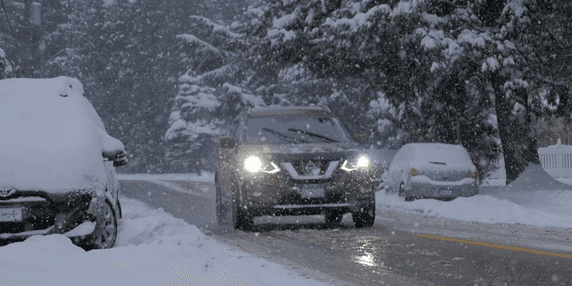
Whether you’re spending the holidays chasing fresh powder on the mountains or travelling to your hometown to visit family or friends, ICBC is asking drivers to prepare for the weather conditions they may face to keep their holiday road trip merry and safe.
With snow on many mountain passes and highways in B.C., and conditions often changing from clear to slippery in a blink, taking the time to prepare your vehicle and reviewing safety tips can go a long way to keeping you safe and reducing your risk of crashing.
December is the top crash month in B.C.— which is not the kind of holiday experience anyone wants. Over Christmas and New Year’s, on average, four lives are lost and 603 people are injured in 2,575 crashes across the province.
Recent winter storms have impacted B.C. roads. Before you travel, visit DriveBC.ca to plan your trip and understand how your route may be impacted. Check for detours and consider alternative travel options as needed.
“Winter road conditions can change in an instant, especially on mountain passes,” said Kathleen Nadalin, ICBC road safety manager. “We want to help you feel confident and prepared for your holiday road trip. Plan for all weather conditions, pack an emergency kit, use winter tires, and drive slow and steady on snowy, icy roads.”
“Underestimating winter roads is a mistake we see all too often,” said Mitchell Martin, owner of Mitchell’s Towing. “Simple steps like using winter tires and slowing down can make the difference between a safe, smooth trip and needing a tow.”
Tips:
Prepare your vehicle for winter conditions. If you’re travelling through mountain passes, many B.C. highways require winter tires labelled with either the mountain/snowflake symbol or the mud and snow (M+S) designation. Top up wiper fluid for clear visibility and pack an emergency kit with essentials like a blanket, warm clothing, food and water.
Check the weather forecast and road conditions for your entire route on DriveBC.ca before hitting the road. If challenging winter conditions are forecast, consider delaying your trip until the weather clears or roads are plowed.
The key to winter driving is to be slow and steady – avoid unexpected sudden movements that could cause you to skid. That means accelerating gently, steering and turning slowly and gradually, and braking slowly and early. Anticipate turns, stops and lane changes well in advance. If visibility is reduced, turn on your headlights and taillights.
Posted speed limits are set for ideal conditions so it’s important to adjust your driving speed to the conditions you encounter. Maintain a safe travelling distance between vehicles and allow increased time and distance for stopping on wet, icy, or snowy roads. Pay close attention as you approach intersections and look for pedestrians. Don't use cruise control on slippery roads.
Don't pass snowplows on the road. They may be equipped with a wing blade on either of its sides which may not be visible due to the snow it sprays.
When temperatures near freezing, be aware of black ice. If you notice ice build-up on your windshield, there's likely black ice on the road. It's commonly found in shaded areas, bridges, overpasses and intersections.
Statistics:**
In B.C., during the Christmas holidays, on average, three people are killed and 357 people are injured in 1,636 crashes. Over New Year's, on average, one person is killed and 246 people are injured in 939 crashes in B.C.
In the Lower Mainland, during the Christmas holidays, on average, 250 people are injured in 1,057 crashes. Over New Year's, on average, 163 people are injured in 584 crashes.
On Vancouver Island, during the Christmas holidays, on average, 44 people are injured in 232 crashes. Over New Year's, on average, 29 people are injured in 127 crashes.
In the Southern Interior, during the Christmas holidays, on average, 45 people are injured in 232 crashes. Over New Year's, on average, 40 people are injured in 159 crashes.
In the North Central region, during the Christmas holidays, on average, 17 people are injured in 106 crashes. Over New Year's, on average, 13 people are injured in 63 crashes in the North Central region.
*Christmas is defined as starting at 18:00 hours December 24 to midnight December 26. New Year's is defined as starting at 18:00 hours December 31 of the previous year to midnight January 1 of the new year. Based on five-year average (2020 to 2024); ICBC data for injury and crashes and police data for fatalities.

